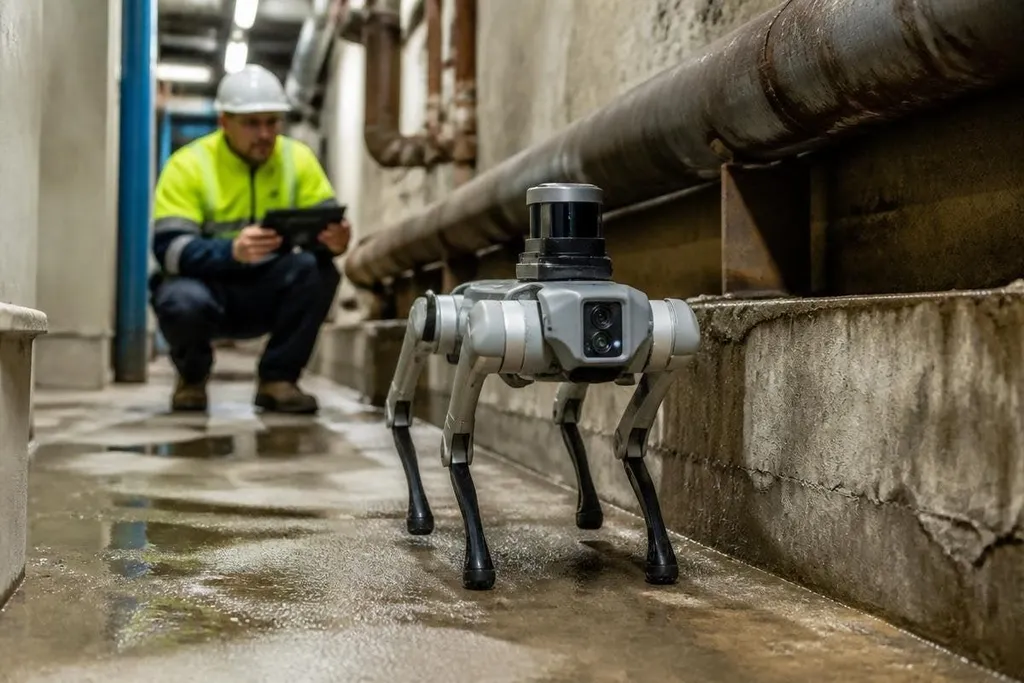
A robot dog can walk into places that are unsafe, tight, or expensive for a person to inspect. Its cameras, sensors, and remote controls can help teams see more, but the same hardware brings safety, privacy, and maintenance risks.
Quick read
- Robot dogs fit inspection, mapping, and remote viewing tasks.
- Their value depends on reliable links, clear routes, and trained operators.
- Privacy, falls, battery limits, and public safety need a plan before deployment.
Where robot dogs can help
Its sensors sit above the floor, so a robot dog can inspect pipes, machinery, corridors, and other areas that may be difficult for a person to reach. A camera gives the operator a live view, while LiDAR measures nearby surfaces and helps build a map of the space.
That setup can reduce the need to send a worker into an area with heat, smoke, unstable flooring, or moving equipment. It can also let one operator check a location from a safer room, provided the network connection stays reliable.
Some models can climb stairs, cross uneven ground, or carry a small sensor package. Those abilities matter on sites where wheels may lose contact with the ground.
They don't remove the need for a person, because someone still has to plan the route, read the sensor data, and decide what action follows.
Robot dogs can also help with repeat checks. A site team might send one along the same route after a shift or after maintenance work, then compare images and sensor readings with earlier records. The useful result comes from spotting a change, not from the robot walking around on its own.
The risks behind the hardware
A four-legged robot can fall. A fall may damage the robot, the sensor package, nearby equipment, or a person standing close to it. Stairs, wet floors, loose cables, poor lighting, and blocked paths all need testing before a regular route starts.
Wireless control adds another weak point. If the link drops, the robot may stop, lose its route, or wait for an operator. A safe deployment needs a clear stop behavior, an emergency stop that people can reach, and a recovery plan for a robot left in a doorway or beside machinery.
Sensors also create privacy questions. Cameras can record workers, visitors, vehicle plates, and documents that were never part of the inspection task. The team needs rules for where the robot may go, what it records, who can view the files, and when those files are deleted.
Battery life sets another limit. A robot that spends its time climbing, carrying a sensor, or working on rough ground will use more power than one moving across a flat floor. Charging plans, spare batteries, and time for checks can shape the work more than the walking ability does.
For a robot dog, runtime tells you little without the task. A dated report from Robot 24 can place that number beside the model, site, and work being tested, which matters when spare batteries, charging time, and staff support enter the budget.
The cost is more than the robot
The purchase price is only one part of the budget. You may also need sensors, software, network changes, training, repairs, storage for recorded data, and time for a worker to supervise each task.
A robot dog makes sense when the task is repeated, the route is known, and sending a person would carry a clear safety or access problem. It makes less sense for a job that happens once, needs fine hand work, or changes every few minutes.
I'd skip a robot dog for a site that hasn't named the task, the operator, and the safe stop plan. A walking demo doesn't show whether the system can fit the daily work.
A buying and safety checklist
Use these checks before a trial:
- Name the task: Write down the inspection or mapping job and the result you need.
- Map the route: Mark stairs, wet areas, cables, doors, people, and moving equipment.
- Test the link: Check control range and the robot's behavior when the connection fails.
- Set data rules: Decide what the cameras record, who can access it, and when it is erased.
- Train the team: Give operators practice with stopping, recovery, charging, and sensor checks.
- Measure the work: Compare time, access, inspection quality, and incidents with the current method.
The next useful test is small: run the robot on one real route, during normal work, with the people and obstacles that route actually contains. If it cannot finish safely and produce records someone can use, its four legs are an expensive detail.